

Why do we give love hearts for Valentines Day?
Editors Note - "I originally wrote this blog back in 2018 and in the last 7 years I have been asked various questions by customers about the psychology of colour and valentines. So I thought I would revisit the subject and expand my original piece. I hope you find it interesting."
It’s not difficult to guess that Valentines day is just round the corner. Shops, social media and websites are full of Love Heart Strewn Images. We see hearts everywhere at this time of year — on cards, chocolates, jewellery and decorations. They’ve become such a familiar symbol that we rarely stop to question where they came from, or why they continue to resonate so strongly.
The story behind the heart symbol — and the colours we associate with love — is far older, and more fascinating, than many of us realise.
"A Love Heart is the beginning of all knowledge" – Thomas Carlyle
One of the most compelling theories behind the familiar heart shape takes us back to the ancient world, and to a now-extinct plant called Silphium.
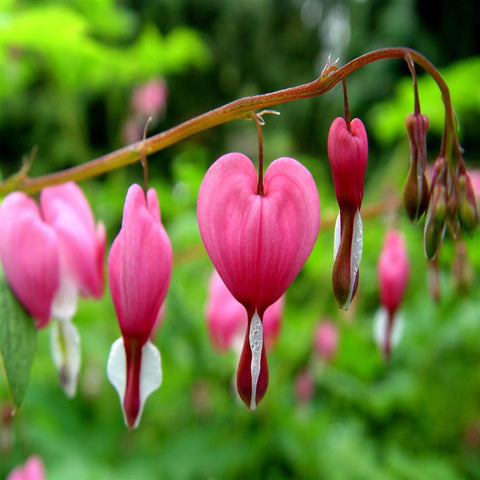
It once grew on the North African Coast, near the Greek Colony of Cyrene (now Libya). The Greeks and the Romans used the plant for many things but most notably as a form of contraception. It is perhaps the plants association with both love and sex that helped to popularise the heart-shaped symbol of the plant's seed pod. The ancient city of Cyrene grew rich from trading the Silphium Plant and it showed it’s loyalty to the plant by using the Love Heart shape as a symbol on their coinage.

More modern thinkers suggest that the Love Heart shape represents the sexuality of the female body. Its form represents the female buttocks, pubic mound and spread vulva. I guess this ties into the ancient thinking to but binding them both is the idea of love, passion and intimacy. In fact everything you need for a good Valentines Day!
Even without hearts, Valentine’s Day would still feel like Valentine’s Day — largely because of its colours. This isn’t a coincidence. There is a lot of science behind colour and how they effect us, so check out why Red and Pink work so well for us around Valentines.
Red: Passion, Warmth and Intensity
The colour Red has a very powerful effect on us. Psychologically and physically, it’s known to:
-
Raise heart rate
-
Capture attention
-
Evoke feelings of passion and desire
It’s the colour of blood, warmth and life itself — and across cultures, it has long symbolised strong emotion and deep connection.
Pink: Affection, Tenderness and Care
The colour Pink is red’s softer counterpart. It carries associations of:
-
Romance
-
Compassion
-
Emotional warmth
Where red feels bold and expressive, pink feels nurturing and reassuring. Together, they mirror the many sides of love — intensity balanced with gentleness. Interestingly, colour psychology suggests we don’t simply associate pink and red with love — our brains respond to them emotionally.
These colours can create a sense of closeness and comfort, which is why they feel so natural for gifting. Even when a piece doesn’t feature hearts, pink and red tones can make it feel thoughtful, intentional and emotionally resonant. In many ways, colours do the storytelling for us.
This year in putting together Valentine gift ideas I have taken this approach and chosen to highlight for you the beautiful red and pink accessories that we offer.
From velvet pieces and jewellery to scarves and small leather accessories, these colours allow you to mark the occasion in a way that feels subtle, stylish and personal — whether you’re buying for someone you love, or treating yourself. I think that Valentine’s Day doesn’t have to shout to be meaningful. Sometimes, it’s simply about choosing something that feels right.
I hope you all enjoy this 14th of February, whether you are giving or receiving a gift.
Thanks for reading.
